

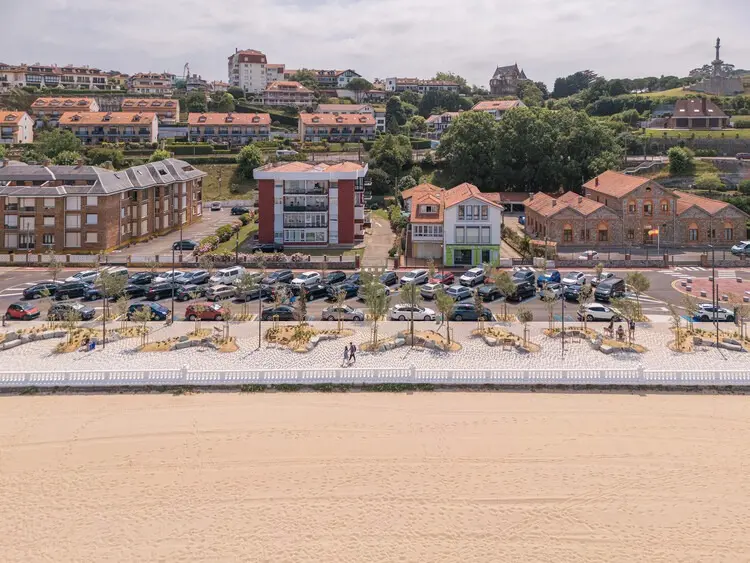
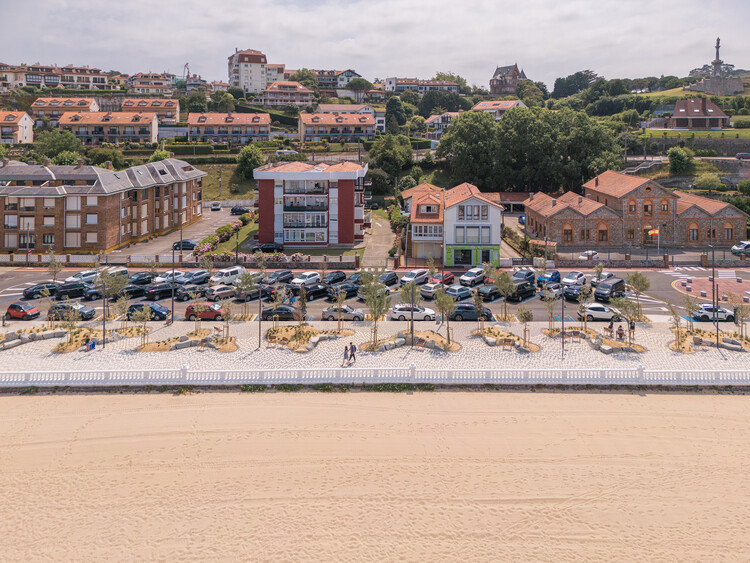
Comillas, Spain — In the picturesque coastal town of Comillas, a profound spatial evolution has officially taken root. Once dominated by the relentless presence of vehicular infrastructure—specifically a narrow, precarious sidewalk pressed against a sprawling asphalt parking lot—the town’s prime coastal fringe has undergone a radical metamorphosis. Designed by the collaborative architectural team of Hector Navarro + ARKHITEKTON, the newly unveiled Comillas Waterfront Promenade successfully reclaims an exceptional stretch of the Spanish coastline, shifting the urban paradigm away from automobile dependency and returning it firmly to the pedestrian.
Curated for the public realm by Valentina Díaz and captured through the striking lenses of architectural photographers Rocío R. Rivas and Miguel de Guzmán of imagensubliminal, the project represents much more than a simple face-lift. It is a strategic act of urban acupuncture, carefully stitching a previously disjointed coastal zone into the broader, pedestrian-friendly network of the town.
Main Facts: Redefining the Edge of Land and Sea
The Comillas Waterfront Promenade project addresses a critical challenge faced by many historic coastal municipalities: how to balance the influx of modern vehicular traffic and parking demands with the preservation and enjoyment of natural geography.
- Project Comillas Waterfront Promenade
- Architects: Hector Navarro + ARKHITEKTON
- Curator: Valentina Díaz
- Photography: imagensubliminal (Rocío R. Rivas + Miguel de Guzmán)
- Location: Comillas, Cantabria, Spain
- Publication Date: October 9, 2026
- Previous Site Condition: A narrow, restrictive pedestrian pathway flanked by an expansive, visually intrusive surface parking lot.
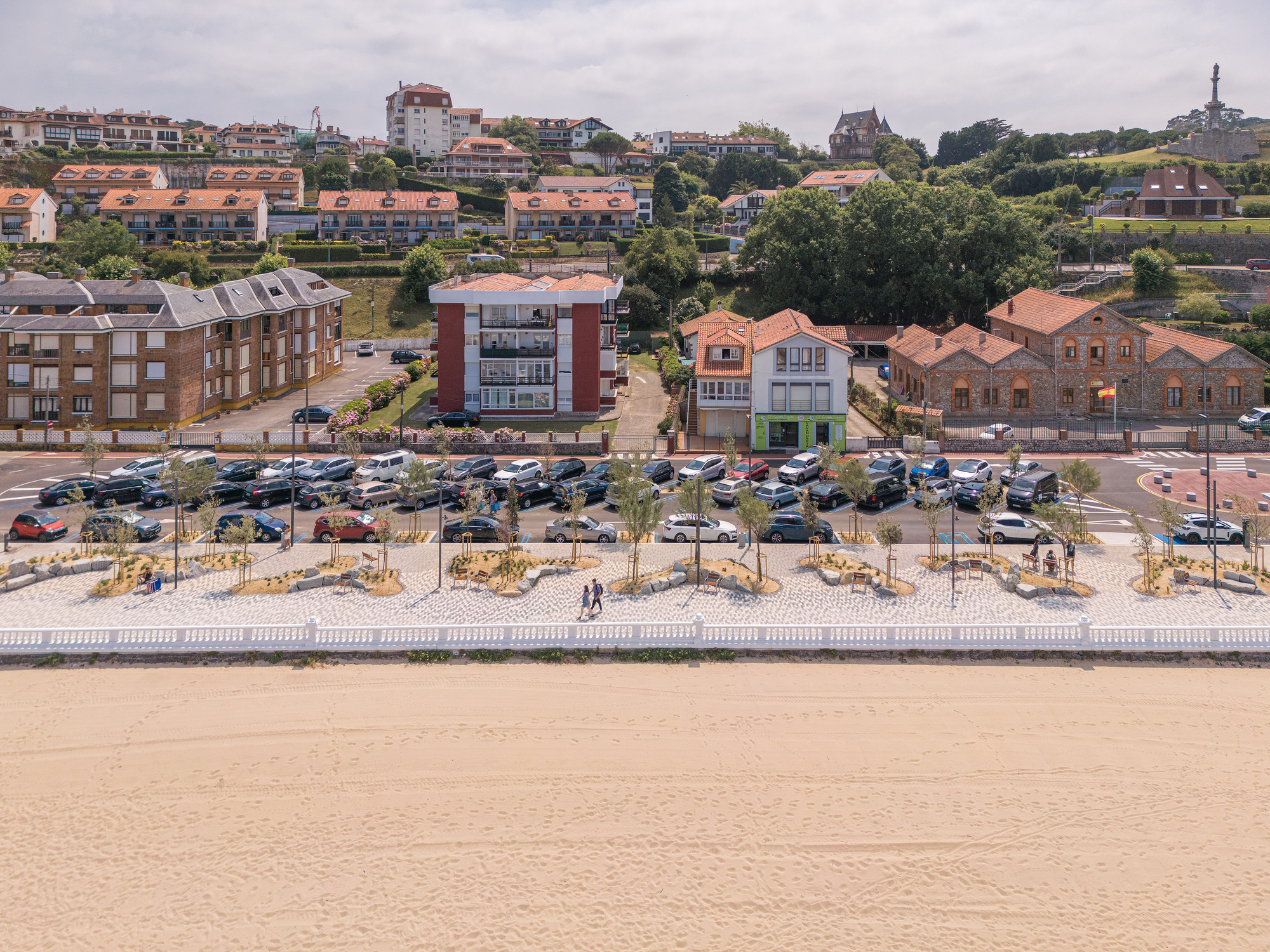
- Core Intervention: Elimination of the dominant parking infrastructure, widening and redesigning pedestrian pathways, and establishing a continuous, integrated public seafront.
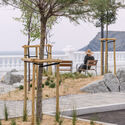
Rather than approaching the site as a space merely requiring cosmetic refurbishment, Navarro and ARKHITEKTON treated the intervention as the creation of an entirely new civic destination. By prioritizing open-air human movement, uninterrupted views of the sea, and high-quality public materials, the design transforms a neglected boundary into a vibrant urban living room.
Chronology of the Transformation: From Parking Lot to Public Realm
The realization of the Comillas Waterfront Promenade did not happen overnight. It represents the culmination of years of urban planning, community debate, and meticulous architectural execution.
Phase 1: Conceptualization and Urban Diagnosis (Pre-2024)
For decades, the waterfront of Comillas suffered from a spatial paradox. While boasting breathtaking views of the Cantabrian coast, the immediate shoreline was heavily compromised by asphalt. The space prioritized storage for cars over the human experience. Local municipal authorities, recognizing the untapped potential of the coastline, launched an initiative to rethink the area’s zoning and traffic flow. Hector Navarro and ARKHITEKTON were brought on board to formulate a master plan that could reconcile environmental sensitivity with heavy public use.
Phase 2: Design Development and Materiality (2024–2025)
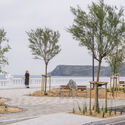
The architectural challenge centered on how to design a resilient maritime facade that could withstand harsh coastal weather while remaining inviting and warm for pedestrians. The design team opted for a seamless integration of durable hardscaping, native landscaping touches, and warm wooden elements that dialogue with both the historic architecture of Comillas and the raw power of the ocean. Detailed traffic studies were conducted to reroute parking requirements away from the immediate cliffside and waterfront edge.
Phase 3: Construction and Site Execution (2025–2026)
Civil works began with the complete demolition of the old asphalt parking matrix and the removal of the undersized sidewalk. Engineers and builders worked meticulously along the sensitive coastal topography to install modern drainage systems, subterranean utilities, and the structural foundations required for the elevated wooden viewing platforms and expansive stone-paved walkways.
Phase 4: Inauguration and Opening (October 2026)
The promenade officially opened to the public in October 2026, instantly altering how locals and tourists interact with the town’s natural assets. The transition from a space dominated by exhaust and parked cars to one characterized by sea breezes, strolling families, and uninterrupted horizons marked a historic milestone for Comillas.
Supporting Data & Architectural Methodology
Urban architecture on the waterfront requires a delicate balance of ecological resilience, structural durability, and human-centric design. The collaboration between Hector Navarro and ARKHITEKTON relies on several key technical and spatial strategies:
- Spatial Reallocation: Over 70% of the surface area previously dedicated to vehicular parking was converted into pedestrian-only zones, green spaces, and communal gathering spots.
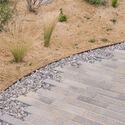
- Material Selection: The palette heavily features marine-grade timber, locally sourced stone, and corrosion-resistant metals capable of withstanding the corrosive saline environment of the Cantabrian Sea.
- Micro-Topography Management: The promenade utilizes subtle level changes and ramps rather than aggressive stairs, ensuring 100% universal accessibility for strollers, wheelchair users, and the elderly.
- Visual Integration: Low-profile lighting fixtures and minimalist railing designs were intentionally specified to ensure that artificial structures never compete with the natural drama of the ocean horizon.
Official Responses and Stakeholder Perspectives
The reception of the Comillas Waterfront Promenade has generated significant discussion among urban planners, municipal leaders, and the local community.
Local municipal authorities have lauded the project as a vital economic and social catalyst. In a joint statement released during the opening week, city representatives emphasized that reclaiming the coastline was essential for the sustainable future of Comillas. “We are no longer just a town that sits near the sea; we are a town that actively embraces it,” municipal planners noted. “This project corrects decades of car-centric planning errors and gives our residents their rightful heritage back.”
Architectural critics have similarly praised Hector Navarro and ARKHITEKTON for their restraint. Rather than imposing an overly futuristic or disruptive monument onto the landscape, the design team chose to let the topography and the sea take center stage. Valentina Díaz, the project’s curator, highlighted this philosophy: “The brilliance of this intervention lies in what it removes just as much as what it adds. By sweeping away the clutter of parked cars, the architects have revealed a spatial poetry that was hidden in plain sight for generations.”
Citizens of Comillas have expressed overwhelming approval, noting that the new promenade has quickly become the social epicenter of the town, particularly during sunset hours when locals gather to walk along the newly minted timber and stone decks.
Broader Implications for Coastal Urbanism
The completion of the Comillas Waterfront Promenade serves as a powerful case study for coastal towns across Europe and beyond. As cities globally grapple with the legacy of 20th-century urban planning—which routinely sacrificed prime ecological and civic waterfronts to the automobile—Comillas offers a replicable blueprint for ecological and social remediation.
1. The Death of the Coastal Parking Lot
For decades, municipal leaders assumed that bringing tourists as close to the water as possible via automobile was economically beneficial. Projects like the one in Comillas prove the exact opposite: prioritizing the pedestrianized human scale creates a higher-quality destination that encourages longer stays, supports local businesses, and fosters community well-being.
2. Climate Resilience and Public Space
Modern coastal architecture must anticipate rising sea levels and intense weather events. By incorporating robust, sustainable materials and permeable design elements, Navarro and ARKHITEKTON have demonstrated that public spaces can be both aesthetically breathtaking and structurally resilient against the forces of climate change.
3. Stitching the Urban Fabric
A waterfront should never feel like an isolated edge; it must function as the living boundary of the town it serves. By meticulously linking the Comillas Waterfront Promenade into the broader municipal network of streets, paths, and plazas, the design team has ensured that the project breathes new life into the entire settlement.
Conclusion
The Comillas Waterfront Promenade by Hector Navarro + ARKHITEKTON stands as a testament to the transformative power of thoughtful architectural intervention. By erasing the asphalt scars of the past and replacing them with an expansive, accessible, and beautifully detailed civic realm, the project has redefined the relationship between a historic Spanish town and its magnificent coastline. As cities worldwide continue to rethink their public spaces in the twenty-first century, Comillas shines as a beacon of what is possible when design champions the pedestrian, honors nature, and prioritizes the collective human experience.
