

Main Facts
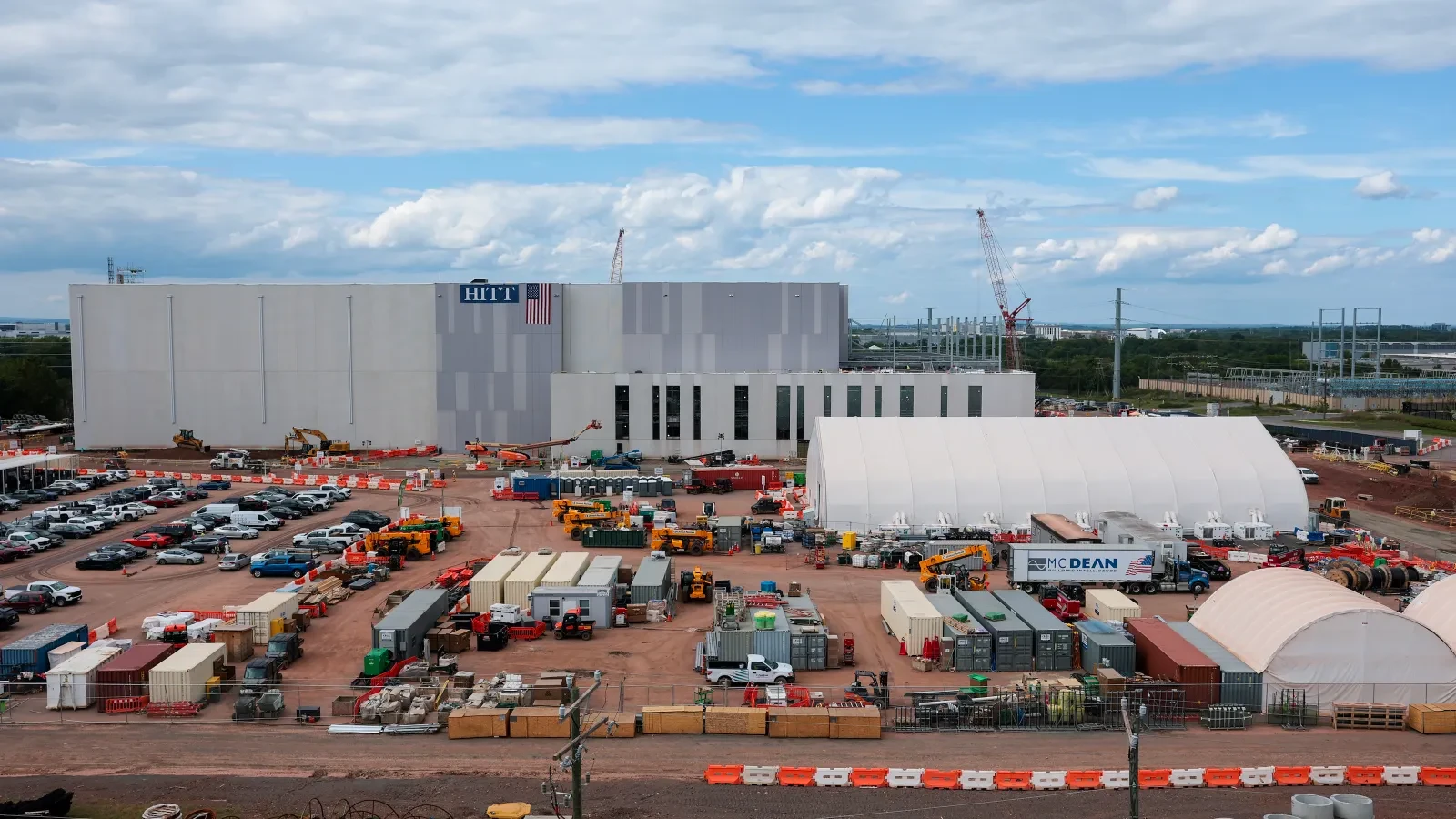
The United States nonresidential construction sector is experiencing a period of profound divergence. Driven almost entirely by the relentless expansion of artificial intelligence infrastructure, data center construction spending has surged to historic heights. According to data released by the Associated Builders and Contractors (ABC), nonresidential construction spending increased for the fifth consecutive month in August 2026, marking a period of expansion that economists are finding increasingly difficult to contextualize.
"Frankly, it’s becoming difficult to contextualize the size and speed of this boom," said Anirban Basu, ABC chief economist.
While the broader nonresidential sector showed signs of life—posting spending increases in 11 of 16 tracked categories in August, including a notable rebound in manufacturing construction for the first time since January—industry experts emphasize that the overall market momentum remains narrow. The staggering capital allocations required to build out artificial intelligence computing capacity, power generation infrastructure, and semiconductor fabrication plants are single-handedly carrying the broader construction spending indices.
However, this micro-level boom in technology-adjacent infrastructure is unfolding against a challenging macroeconomic backdrop. A resurgence in materials and labor cost escalation during the second half of 2026, combined with a recent surge in U.S. Treasury yields, is exerting severe upward pressure on borrowing costs. Furthermore, policy instability at the federal level—highlighted by a short-term federal highway funding extension that excludes vital program allocations—threatens to stall progress across public infrastructure projects. Economists and trade associations are warning that without comprehensive legislative action and relief from inflationary pressures, the broader construction recovery remains precarious.
Chronology of the 2026 Construction Landscape
The trajectory of the 2026 construction market has been defined by sharp contrasts between private-sector technological expansion and public-sector budgetary constraints.
- January 2026: Manufacturing construction spending hits a temporary trough, capping a multi-month cooling period following the initial legislative push of the CHIPS Act and Infrastructure Investment and Jobs Act (IIJA).
- April – July 2026: Data center construction spending accelerates at an exponential rate. Driven by hyper-scaler investments in generative AI capabilities, massive facilities break ground across traditional hubs like Northern Virginia (Ashburn), as well as emerging secondary markets equipped with sufficient power grid capacity.
- August 2026: Nonresidential construction spending registers its fifth consecutive month of positive growth. ABC reports that 11 out of 16 subcategories post monthly gains, with manufacturing construction finally turning positive for the first time since the year began. Yet, industry analysts note that this broad-based monthly improvement masks deep underlying vulnerabilities.
- September 2026: Inflationary pressures reemerge with renewed force. The Federal Reserve’s monetary policy adjustments fail to ease long-term borrowing burdens, as a significant surge in Treasury yields drives up financing costs for private developers and public agencies alike. Concurrently, labor shortages intensify across specialized trades.
- October 1, 2026: A short-term federal highway funding extension takes effect, avoiding an immediate government-induced slowdown but failing to secure baseline funding for crucial transportation programs. Trade groups, including the Associated General Contractors of America (AGC), immediately flag the legislative stopgap as insufficient for long-term project planning.
- October 2, 2026: ABC and AGC simultaneously release macroeconomic reports warning that the industry’s recent gains are resting on a fragile foundation, vulnerable to legislative gridlock, escalating material costs, and severe workforce constraints.
Supporting Data and Economic Indicators
The quantitative reality of the 2026 construction economy reveals an industry bifurcated into hyper-growth technology sectors and plateauing traditional segments.
Data center investment is currently operating in what economists describe as "a league of its own." The sheer volume of concrete, structural steel, specialized cooling equipment, and high-voltage electrical infrastructure required for modern AI data centers has created localized supply chain bottlenecks. Facilities like those developed by technology and engineering firms in major hubs such as Ashburn, Virginia, routinely require power allocations equivalent to small cities, tying data center construction directly into regional electrical grid expansion.
Beyond data centers, the broader nonresidential market showed unexpected resilience in August, expanding across 11 of 16 categories. Most notably, manufacturing construction broke a seven-month stagnation period, signaling that private investments in domestic supply chains, clean energy technology, and EV manufacturing are attempting to find their footing despite high interest rates.
Yet, these positive figures are heavily counterbalanced by cost escalation metrics:
- Material Cost Inflation: Producer price indices for construction inputs have trended upward through the second and third quarters of 2026, driven by rising costs for processed metals, electrical switchgear, and petroleum-based products.
- Labor Squeezes: The industry continues to grapple with a structural workforce deficit. Skilled labor shortages in electrical, mechanical, and specialized technology installation trades have inflated wages, driving operational costs higher for contractors operating on fixed-price bids.
- Financing Constraints: Following macroeconomic shifts in September 2026, the surge in Treasury yields has directly translated into higher commercial lending rates. Private developers face tighter debt service coverage ratios, forcing many to shelve or scale back speculative commercial and multi-family residential projects.
Official Responses and Expert Analysis
Leading economists from major construction trade organizations have issued coordinated warnings regarding the sustainability of current spending trajectories.

Anirban Basu, chief economist for the Associated Builders and Contractors, underscored the unprecedented nature of the current cycle while urging caution about the months ahead.
"Despite this broad improvement, momentum will likely remain confined to the data center and power categories in the months to come," Basu noted in the October release. "Materials and labor cost escalation have reemerged during the second half of 2026, and the recent surge in Treasury yields will continue to put upward pressure on borrowing costs."
The Associated General Contractors of America echoed these concerns, pointing specifically to the intersection of private-sector cost pressures and public-sector legislative failures. Ken Simonson, chief economist for the AGC, evaluated the August spending data with measured skepticism.
"It is encouraging to see several construction segments stabilized or turned positive in August," Simonson said. "However, all of these categories remain at risk of stagnating or shrinking as workforce shortages continue to grow, materials costs and interest rates continue to increase, and gridlock in Congress continues to undermine federal funding for highway and transit programs."
The AGC specifically criticized the reliance on short-term legislative patches, arguing that stopgap measures destroy long-term certainty for civil infrastructure contractors.

Implications for the Construction Industry
The long-term implications of the current macroeconomic and sectoral trends point toward significant restructuring within the construction industry over the next 12 to 24 months.
1. Market Concentration
Construction firms lacking the technical specialization required for data center, advanced manufacturing, or heavy power infrastructure may find themselves competing for a shrinking pool of traditional commercial projects. General contractors are increasingly forced to pivot their workforce development and operational strategies toward electrical and technological integration.
2. Public Sector Vulnerability
With federal infrastructure funding caught in congressional gridlock and reliant on short-term extensions, state and local departments of transportation face severe budgetary uncertainty. Long-range capital improvement plans for bridges, highways, and mass transit systems face potential delays, threatening project pipelines for civil engineering and heavy highway contractors.
3. Margin Compression and Risk Management
As borrowing costs remain elevated due to high Treasury yields, and as labor and material cost escalations continue to squeeze project budgets, contractors face severe risks of margin compression. Fixed-price contracting is becoming increasingly hazardous, leading to a broader adoption of alternative delivery models, such as construction manager-at-risk (CMAR) and integrated project delivery (IPD), designed to share risk more equitably between owners and builders.
4. Workforce Strategies
The persistent labor squeeze will accelerate the industry’s adoption of off-site prefabrication, modular construction, and advanced digital tools—including artificial intelligence and building information modeling (BIM)—to maximize productivity with a constrained workforce. Firms that successfully invest in workforce retention, competitive compensation, and technological enablement will be best positioned to weather the turbulent economic climate ahead.
