

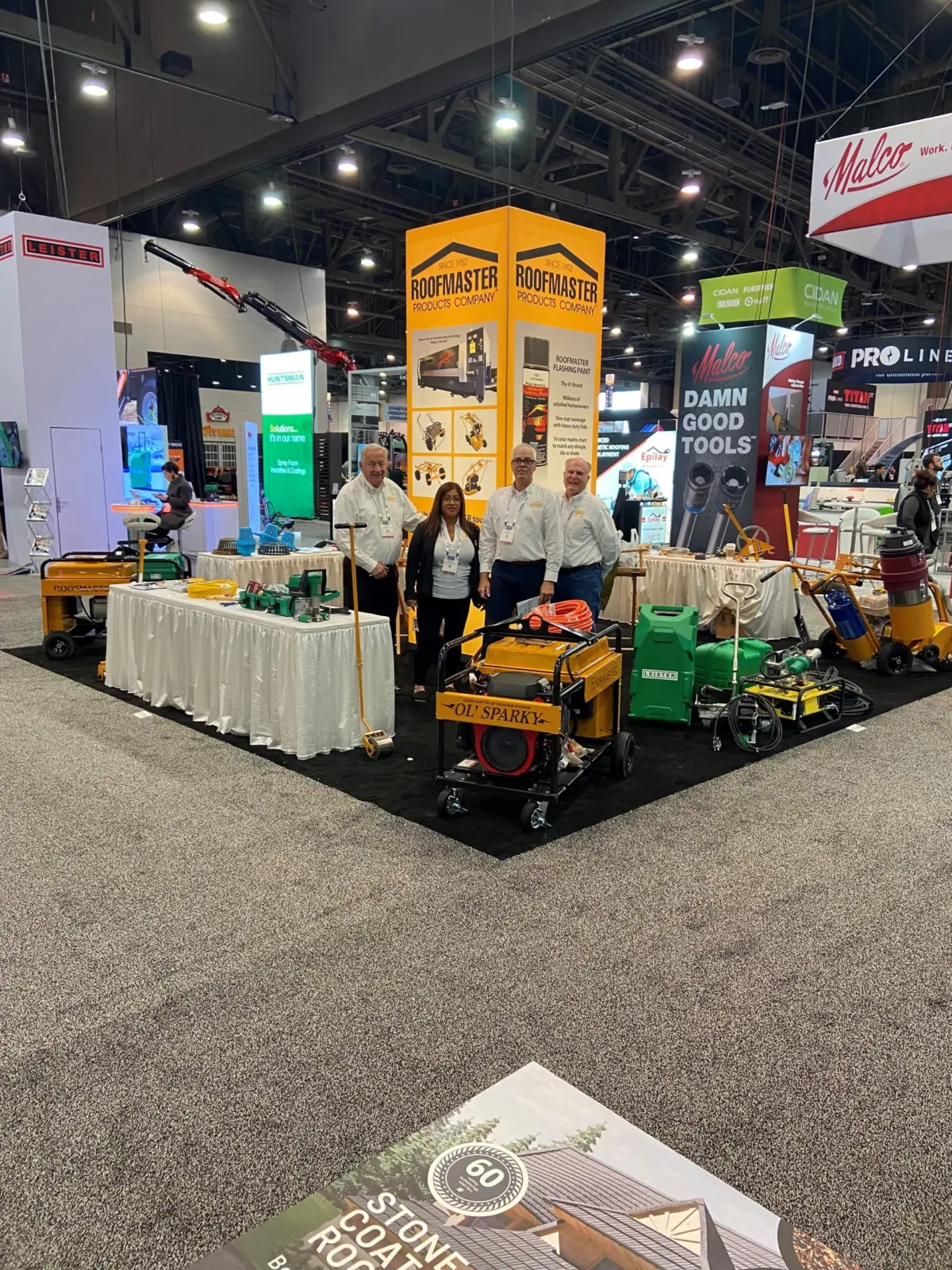
LOS ANGELES, CA — The commercial roofing sector, long regarded as one of the most traditional and labor-intensive segments of the construction industry, is undergoing a rapid technological and regulatory evolution. At the center of this transformation is the supply chain architecture that equips the modern roofer. An in-depth analysis of the product ecosystem from industry giant Roofmaster Products Company reveals a highly sophisticated, hyper-specialized inventory designed to meet the demands of a changing regulatory environment, severe labor shortages, and a market-wide transition toward high-performance, single-ply elastomeric and sustainable roofing systems.
Once dominated by simple hand tools and rudimentary hot-asphalt kettles, the modern roofing distributor’s catalog now functions as a blueprint for high-tech industrial operations. From specialized automated hot-air welders to precision moisture detectors, infrared thermometers, and advanced fall-arrest systems, the equipment powering today’s commercial jobsites reflects an industry-wide push for mechanization, risk mitigation, and scientific precision.
Main Facts: The Anatomy of a Modern Commercial Roofing Ecosystem
An analysis of Roofmaster’s comprehensive commercial product line reveals several key operational trends currently shaping the building envelope sector:
- The Dual-Track Technology Landscape: The commercial roofing market continues to maintain a dual footprint. It services legacy Built-Up Roofing (BUR) and modified bitumen systems through advanced thermal kettles, tanker pumps, and LP torches, while simultaneously expanding its footprint in single-ply membranes (TPO, PVC, EPDM) with robotic hot-air welders, specialized adhesive rollers, and precision testing tools.
- Mechanization as a Labor Force Multiplier: With skilled labor shortages at historic highs, the industry is increasingly relying on powered deck equipment—such as automated felt slitters, power roof saws with carbide blades, conveyors, and advanced spraying systems like the GranuleMaster and WarmMaster—to dramatically reduce man-hours per square.
- The Zero-Tolerance Safety Mandate: Driven by aggressive OSHA enforcement and rising workers’ compensation premiums, safety equipment has evolved from an afterthought to a primary procurement category. This is evidenced by highly engineered permanent and temporary roof anchors, comprehensive fall-arrest harnesses, perimeter warning systems, and specialized personal protective equipment (PPE).
- Water Management and Retrofitting Infrastructure: Changing climate patterns and intense storm events have elevated the importance of advanced roof drainage. The commercial sector is heavily prioritizing retrofit drains (including aluminum, copper, and plastic variants) that allow contractors to restore drainage integrity without the costly demolition of existing structural plumbing.
Chronology: The Technological Evolution of the Commercial Roof
To understand how the modern roofing jobsite arrived at its current state of technological complexity, it is necessary to trace the chronological shifts in materials and equipment over the past seven decades.
+-----------------------------------------------------------------------------------+
|                               CHRONOLOGICAL EVOLUTION                             |
+-----------------------------------------------------------------------------------+
| 1950s - 1980s: The Built-Up Roofing (BUR) Hegemony                                |
|   - Dominance of coal tar pitch and hot asphalt.                                  |
|   - Equipment: Heavy-gauge steel kettles, mop carts, cotton/fiberglass mops.      |
|                                                                                   |
| 1990s - 2000s: The Rise of Elastomerics and Single-Ply Membranes                  |
|   - Introduction of EPDM, TPO, and PVC to reduce labor and chemical hazards.      |
|   - Equipment: Handheld hot-air welders, modified bitumen LP torches, rollers.    |
|                                                                                   |
| 2010s - Present: The Era of Automation, Safety Compliance, and Sustainability      |
|   - Strict OSHA fall protection mandates; high-density structural demands.        |
|   - Equipment: Powered deck equipment, infrared scanners, solar mounts, retrofit  |
|     drainage, integrated safety warning lines.                                    |
+-----------------------------------------------------------------------------------+
The Era of Built-Up Roofing (BUR) Hegemony (1950s–1980s)
During the post-war construction boom, commercial roofing was synonymous with Built-Up Roofing (BUR). Multi-ply systems consisting of alternating layers of asphalt-saturated felt and hot liquid bitumen required heavy, dangerous, heat-intensive machinery on-deck.
The standard jobsite during this era was defined by heavy-gauge steel tar kettles heating asphalt to temperatures exceeding 400°F (204°C). This required specialized litewall tubing, high-pressure regulators, tanker pumps, and hot asphalt carriers. On-deck distribution relied on manual labor utilizing cotton or fiberglass applicator mops, mop carts, and manual felt layers. While highly durable, these systems posed substantial burn, fire, and inhalation hazards to workers.
The Single-Ply and Elastomeric Revolution (1990s–2000s)
As environmental regulations tightened and labor costs began to climb, the industry sought alternatives to hot-mopped asphalt. The introduction of synthetic single-ply membranes—such as Thermoplastic Polyolefin (TPO), Polyvinyl Chloride (PVC), and Ethylene Propylene Diene Terpolymer (EPDM)—fundamentally altered jobsite dynamics.
The heavy asphalt kettle was increasingly replaced by single-ply tools and equipment. Seaming moved away from liquid adhesives and hot asphalt toward molecular heat welding, utilizing specialized hot-air welders and silicone/steel rollers. Modified bitumen systems also evolved, utilizing liquid propane (LP) torches to melt backing materials, necessitating advanced LPG tanks, high-flow hoses, and safety shutoff valves.
The Era of Automation, Safety Compliance, and Sustainability (2010s–Present)
Today, the commercial roofing landscape is defined by digital diagnostic tools, mechanized deck equipment, and strict safety compliance. Manual inspection has been augmented by infrared thermometers and non-invasive moisture detectors to locate trapped water within the insulation envelope before tear-off begins.
Additionally, the integration of green technologies is highly visible. Rooftop footprints now routinely incorporate solar mounting brackets, structural paver supports, and low-profile ventilation systems such as the CommDeck platform for residential and commercial composition, tile, and metal roofs.
Supporting Data: Market Realities and Regulatory Pressures
The operational shifts reflected in modern equipment inventories are directly supported by market economics and occupational safety data.
The Economics of Single-Ply vs. BUR
According to recent industry reports from the National Roofing Contractors Association (NRCA), single-ply membrane installations now account for over 65% of all commercial roofing volume in North America, with TPO leading the segment. This shift is highly visible in supply chain catalogs, where single-ply seaming accessories, adhesive rollers, and specialized hand-testers outnumber traditional asphalt mop accessories.
COMMERCIAL ROOFING MARKET SHARE BY SYSTEM TYPE (ESTIMATED)
=========================================================
[###################################] 65%  Single-Ply (TPO, PVC, EPDM)
[###########] 20%  Modified Bitumen / BUR (Hot & Cold Applied)
[#####] 10%  Metal Roofing Systems
[##] 5%   Other (Liquid Applied, Green/Solar Roofs)
The Cost of Non-Compliance: OSHA Fall Protection Enforcement
The occupational hazards of roofing remain a primary driver of equipment innovation. The U.S. Bureau of Labor Statistics (BLS) consistently ranks falls from elevation as the leading cause of death in the construction industry, accounting for over 30% of all jobsite fatalities.
In response, OSHA has intensified its enforcement stance. Fall Protection (Standard 1926.501) has been the most frequently cited OSHA violation for over a decade. A single violation can carry a penalty exceeding $16,000, while willful or repeated violations can surpass $161,000.
This regulatory pressure has turned fall-arrest systems, structural roof anchors, perimeter warning lines, and safety harnesses into critical business assets rather than mere compliance costs.
Official Responses and Industry Insights
Industry executives and technical experts stress that the modernization of roofing equipment is not just about compliance, but also about survival in a highly competitive market.
In a technical bulletin regarding jobsite efficiency, the National Roofing Contractors Association (NRCA) noted:
"The integration of powered on-deck equipment—such as automated roof cutters, power sweepers, and mechanical conveyors—is no longer an option for large-scale commercial contractors. It is a baseline operational requirement to offset the severe shortage of skilled field labor."
Furthermore, safety directors at leading national roofing firms emphasize the role of standardized equipment in mitigating systemic business risk. Speaking on condition of anonymity, a safety director for a top-ten commercial contractor explained:
"A single catastrophic fall can bankrupt a mid-sized roofing contractor. Our insurance carriers now mandate that we specify certified structural roof anchors and personal fall-arrest systems on every project. We look for suppliers who provide fully integrated safety ecosystems, from the anchor point to the harness."
On the manufacturing front, engineers developing spray application systems point to the necessity of precision thermal management. The development of heated material delivery platforms like the WarmMaster system allows contractors to apply single-ply adhesives and elastomeric coatings at optimal viscosities, even during shoulder-season temperatures, effectively extending the annual construction window.
Implications: The Future of the Commercial Rooftop
The technological composition of modern commercial roofing equipment carries profound implications for the future of the built environment, labor dynamics, and building design.
+------------------------------------------------------------------------------------+
|                                FUTURE IMPLICATIONS                                 |
+------------------------------------------------------------------------------------+
| Decarbonization and Cool Roof Mandates                                             |
|   - High-reflectivity single-ply membranes reduce urban heat island effects.       |
|   - Precision tools ensure optimal thermal performance of insulation.              |
|                                                                                    |
| Automation and the Labor Deficit                                                   |
|   - Mechanized tools allow smaller crews to complete high-volume installations.     |
|   - Reduces physical toll, helping to retain an aging workforce.                  |
|                                                                                    |
| Circular Construction and Retrofitting                                            |
|   - Rise of retrofit drains avoids complete roof tear-offs.                        |
|   - Preserves structural integrity of existing concrete and metal decks.           |
+------------------------------------------------------------------------------------+
Decarbonization and Cool Roof Mandates
As municipal building codes increasingly adopt stringent energy efficiency and decarbonization targets, the commercial rooftop has become prime real estate for climate mitigation. "Cool roofs"—which utilize highly reflective white TPO or PVC membranes to deflect solar radiation—are now mandatory in many jurisdictions, including California (Title 24) and major metropolitan areas across the Sun Belt.
The installation of these reflective systems requires clean, precision welding and adhesive application. Any failure in seaming can lead to moisture intrusion, degrading the thermal R-value of the underlying polyisocyanurate insulation. Consequently, tools like automatic hot-air welders and non-destructive moisture detectors are critical to validating the thermal performance of modern building envelopes.
Automation as an Answer to the Labor Deficit
The average age of a commercial roofing professional continues to rise, while the pipeline of younger workers entering the trade remains constrained. To survive, contractors are using technology to decouple labor hours from installed square footage.
Mechanized equipment—such as powered conveyors that transport materials directly to the roof deck, automated saws that slice through old multi-ply systems, and motorized material handling carts—allows a crew of four to accomplish what once required a crew of eight. This trend is likely to culminate in the widespread adoption of semi-autonomous seaming robots and advanced drone-assisted diagnostic imaging.
The Transition to Circular Construction and Retrofitting
The high cost of raw materials and structural steel is driving a pivot toward building preservation and retrofitting. Rather than performing a complete structural tear-off, which contributes millions of tons of waste to landfills annually, engineers are specifying roof recovery systems.
This recovery model relies on specialized hardware like low-density deck fasteners, Tube-Lok systems, and high-performance retrofit drains. By installing a custom-engineered retrofit drain directly into an existing copper or cast-iron drain pipe, contractors can restore hydrological integrity to a building without disturbing the interior ceiling space or the existing structural deck.
Conclusion: The Professionalization of the Building Envelope
As the commercial roofing industry marches toward the mid-2020s, the distinction between "low-tech" and "high-tech" trades is rapidly disappearing. The modern commercial roofer is an industrial technician operating in a highly regulated, digitally monitored environment.
The comprehensive catalog of modern roofing suppliers like Roofmaster is more than a list of tools; it is an index of an industry’s maturity. From the safety-critical design of fall-arrest harnesses to the thermal precision of WarmMaster spraying systems, the tools of the trade are transforming the rooftop from a hazardous work environment into a highly engineered, efficient, and sustainable platform.
