

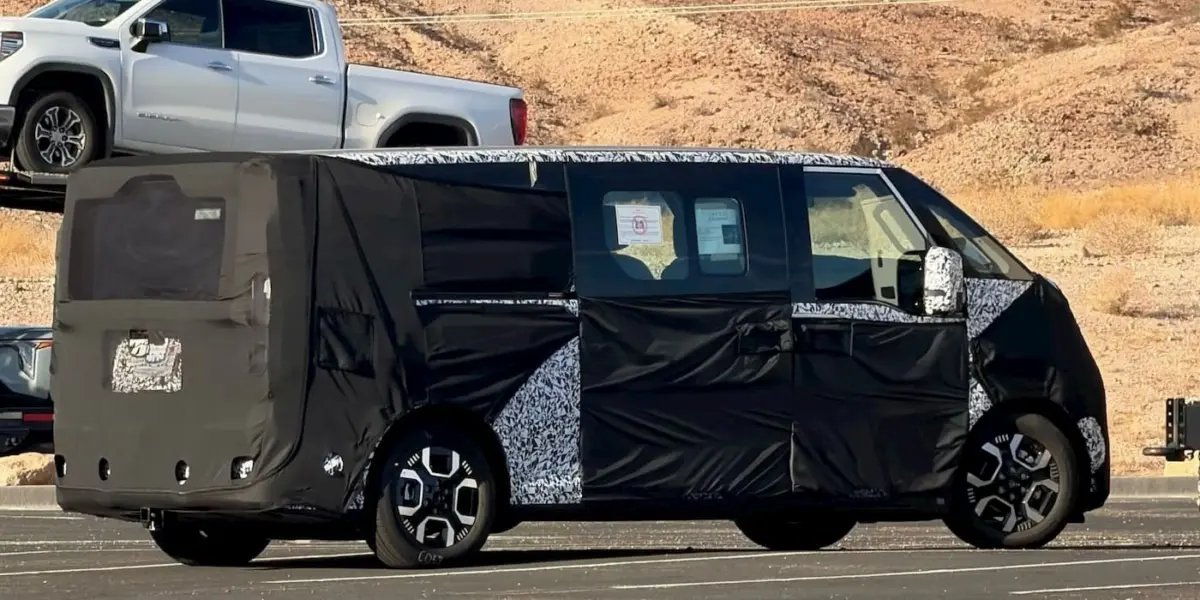
Just days after making its grand global debut at the IAA Transportation show in Hanover, Germany, Kia’s newly unveiled PV7 electric vehicle has already been spotted undergoing rigorous hot-weather testing on American soil. The swift appearance of a camouflaged prototype in the United States has set the automotive blogosphere abuzz, reigniting intense speculation over whether the South Korean automaker plans to introduce its expanding Platform Beyond Vehicle (PBV) ecosystem to North American commercial and consumer markets.
While the PV7 is positioned as a cornerstone for Kia’s aggressive push into the European and Asian light commercial vehicle (LCV) segments, the sighting across the Atlantic raises critical questions about global market strategies, regulatory hurdles, and the evolving landscape of commercial fleet electrification.
Main Facts: Unveiling the Kia PV7
The Kia PV7 represents the second and substantially larger installment in the brand’s dedicated PBV electric van lineup, following the smaller PV5. Unveiled to industry leaders and media at Hanover on Monday, the PV7 is designed to capture a major share of the heavy-duty logistics, delivery, and passenger-shuttle markets.
Measuring over 17.5 feet (5,350 mm) in length, the PV7 dwarfs its sibling, the PV5, by approximately two feet. This expansive footprint allows Kia to engineer versatile variants tailored to specific commercial and passenger needs. At launch, the lineup is anchored by two primary models: the Cargo and the Passenger.
![Kia’s new PV7 EV van shows up in the US [Image]](https://electrek.co/wp-content/uploads/sites/3/2026/09/Kia-PV7-US.jpeg?quality=82&strip=all&w=1400)
- Battery and Performance Options: The PV7 is underpinned by nickel-cobalt-manganese (NCM) battery packs available in two capacities: 71.5 kWh and 96.2 kWh. According to preliminary WLTP estimates, the Long Range Cargo variant achieves an impressive driving range exceeding 285 miles (460 km) on a single charge.
- Powertrain and Drivetrain: Front-wheel drive (FWD) comes as standard across the initial release, with an all-wheel-drive (AWD) variant slated for future introduction. Depending on the chosen configuration, the FWD powertrain outputs up to 268 horsepower (200 kW) and 309 lb-ft (420 Nm) of torque.
- Charging Infrastructure: Leveraging an advanced 800-volt electrical architecture, the PV7 supports high-speed DC fast charging. When connected to a 350 kW charger, the vehicle can replenish its battery from 10% to 80% in approximately 25 minutes, minimizing downtime for fleet operators.
- Cargo and Passenger Capacities: The Cargo model is engineered for robust logistics, offering 2- and 3-seat configurations with up to 6.1 cubic meters of storage space in standard configurations, expanding to 8 cubic meters in the High Roof variant. The Passenger version serves as a flexible family hauler or corporate shuttle, seating up to nine occupants globally, with an 11-seat configuration uniquely designated for the South Korean domestic market.
Chronology: From Concept to Global Debut and US Testing
The journey of Kia’s PBV lineup has been rapid, reflecting the urgent industry demand for dedicated commercial electric vehicles.
- Early Concept Phases: Kia initially outlined its modular PBV strategy at international tech and mobility exhibitions, showcasing a vision where a single skateboard chassis could host multiple interchangeable upper bodies tailored to distinct commercial tasks.
- The PV5 Precedent: The smaller PV5 was previously spotted undergoing road testing in the United States on multiple occasions, sparking intense rumors that Kia was preparing a direct challenge to urban delivery vans in North America. Despite these sightings, the PV5 has yet to materialize in US showrooms.
- September 2026 – Global Premiere: Kia officially takes the covers off the PV7 at the IAA Transportation show in Hanover, Germany. Company executives emphasize that the vehicle is specifically engineered to target the heart of Europe’s competitive LCV market.
- September 2026 – The US Sighting: On the exact same day as its European debut, automotive spy photographers—most notably KindelAuto—capture a heavily disguised PV7 prototype undergoing hot-weather testing in the US. This unexpected sighting immediately complicates the narrative that the vehicle is exclusively intended for Eastern and Western Hemisphere markets outside North America.
- Projected Launch Timeline: Kia has formally scheduled the commercial launch of the PV7 for South Korea and Europe in the second half of 2027. Following this regional rollout, the company intends to introduce up to 23 total variants, though a definitive timeline for North American availability remains unconfirmed.
Supporting Data & Technical Specifications
To fully understand the market positioning of the Kia PV7, it is essential to examine the technical architecture and dimensional metrics that set it apart from traditional internal combustion engine (ICE) vans and early-generation electric conversions.
| Specification | Kia PV7 (Cargo / Passenger) |
|---|---|
| Overall Length | > 17.5 feet (5,350 mm) |
| Battery Capacities | 71.5 kWh / 96.2 kWh (NCM) |
| Maximum Range (WLTP) | > 285 miles (460 km) for Long Range Cargo |
| Electrical Architecture | 800V |
| DC Fast Charging (10%-80%) | ~25 minutes (using a 350 kW charger) |
| Powertrain Output | Up to 268 hp (200 kW) / 309 lb-ft (420 Nm) |
| Drive Configurations | FWD (Standard), AWD (Upcoming) |
| Cargo Volume | 6.1 cubic meters (Standard) up to 8 cubic meters (High Roof) |
| Passenger Seating | Up to 9 occupants (Global); up to 11 occupants (Korea) |
| Total Planned Variants | 23 derivatives |
The integration of an 800V electrical system is a particularly critical data point. While many commercial electric vans continue to utilize 400V architectures that suffer from prolonged charging times and heavy thermal loads under continuous fleet operation, Kia’s adoption of high-voltage technology positions the PV7 at the cutting edge of commercial EV efficiency. By allowing fleet operators to recover nearly 200 miles of range in under half an hour, the PV7 addresses the primary economic pain point of fleet electrification: vehicle uptime.
Official Responses and Strategic Intent
Speaking to reporters at the Hanover reveal, Kia President and CEO Ho Sung Song shed light on the strategic thinking behind the vehicle’s debut location and target demographics. Song noted that the decision to unveil the PV7 in Germany was a deliberate move to challenge incumbent commercial vehicle manufacturers on their home turf.
![Kia’s new PV7 EV van shows up in the US [Image]](https://electrek.co/wp-content/uploads/sites/3/2026/09/Kia-PV7-EV-debut.jpeg?quality=82&strip=all)
"We are aiming straight at the heart of Europe’s light commercial vehicle segment," Song stated, highlighting the PV7’s role as the larger, more capable sibling to the urban-focused PV5.
Regarding future market expansions, Kia’s official corporate statements remain carefully guarded. While the company acknowledges that "additional markets, derivatives, and conversion models" will follow the initial 2027 launch window in Korea and Europe, executives have consistently declined to offer concrete specifics regarding North American homologation or distribution timelines.
The presence of testing mules in the US is viewed by industry analysts not necessarily as a sign of an imminent US launch, but rather as part of Kia’s exhaustive global validation protocols. Automakers frequently subject prototype powertrains and thermal management systems to extreme desert and high-temperature environments in the American Southwest, regardless of whether the final product will ultimately be retailed in the region.
Implications for the North American and Global EV Markets
The sighting of the PV7 in the US, juxtaposed against the backdrop of its European launch, carries significant implications for the future of commercial mobility, international trade policy, and fleet management.
![Kia’s new PV7 EV van shows up in the US [Image]](https://electrek.co/wp-content/themes/ninetofive/dist/images/google-preferred-source-badge-dark.png)
1. The Tariff and Manufacturing Hurdle
The most formidable barrier preventing the PV7 from reaching US buyers is rooted in industrial geography. Kia manufactures its dedicated PBV lineup at a specialized facility in South Korea. Consequently, any units imported into the United States would be subjected to steep import tariffs. Furthermore, vehicles manufactured outside North America are currently ineligible for lucrative federal commercial clean vehicle tax credits under existing domestic content and final assembly regulations, such as those influenced by the Inflation Reduction Act and subsequent trade policies under the current administration. Without a localized manufacturing footprint—either in the US or within a United States-Mexico-Canada Agreement (USMCA) partner nation—importing low-margin commercial work vans becomes financially unviable for foreign automakers.
2. Fleet Electrification Dynamics
North American commercial fleets—ranging from last-mile delivery giants like Amazon, FedEx, and UPS to municipal service providers—are aggressively seeking reliable, high-capacity electric vans. While domestic offerings like the Ford E-Transit and BrightDrop (General Motors) occupy significant market share, there remains a persistent demand for modular, high-technology alternatives. The PV7’s spacious up to 8-cubic-meter cargo capacity and ultra-fast 800V charging architecture would make it an exceptionally competitive option for US fleets if trade and manufacturing barriers could be overcome.
3. The Future of the PBV Ecosystem
Kia’s long-term vision extends far beyond traditional van sales. The overarching Platform Beyond Vehicle strategy encompasses software-defined vehicles, modular upper bodies that can be swapped to transform a cargo van into a mobile office or retail storefront, and comprehensive fleet management software. Whether or not the physical PV7 sheetmetal eventually graces American highways, the underlying software and modular skateboard platforms being tested globally will undoubtedly shape the future design language and utility of commercial transport worldwide.
Conclusion
For now, automotive enthusiasts and commercial operators in the United States must temper their expectations. While the Kia PV7 is undoubtedly a masterclass in packaging, efficiency, and commercial utility—as evidenced by its rapid evolution from concept to production reality and its appearance on US testing asphalt—economic and political headwinds make a North American release unlikely in the near term. As Kia prepares for its official market rollout in Korea and Europe in the second half of 2027, the rest of the world will be watching closely to see if this versatile electric workhorse can successfully redefine the global commercial vehicle landscape.
