

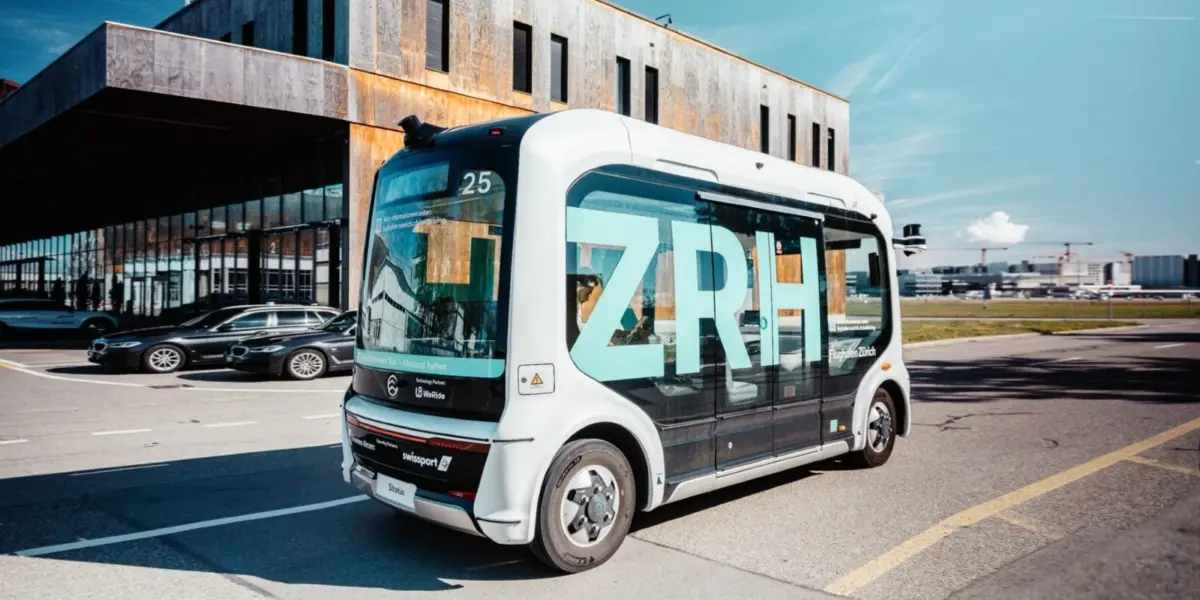
ZURICH, SWITZERLAND — In a landmark development for European aviation and autonomous transit, Zurich Airport has officially deployed a fleet of fully automated electric shuttle buses on its grounds. Operating entirely without a safety driver behind the wheel, the pilot project represents a monumental leap forward for commercial Level 4 (L4) autonomy in a live, highly regulated operational environment.
Co-developed in strategic partnership with autonomous vehicle technology leaders WeRide, the project underscores a broader global shift toward electrification, decarbonization, and automation within critical transport infrastructure. While autonomous trials have increasingly dotted public roadways worldwide, integrating driverless technology into the complex, safety-critical ecosystem of an international airport sets a new benchmark for the aviation sector.
Main Facts: Taking the Wheel Out of the Equation
The milestone deployment centers on two fully electric, self-driving shuttle buses currently traversing designated service routes across Zurich Airport’s extensive property. Unlike lower-tier autonomous tests that still require a human "safety driver" poised to take over in emergencies, these vehicles operate with an entirely empty driver’s seat.
- The Technology: Built in collaboration with Chinese autonomous vehicle specialist WeRide, the shuttles achieve SAE Level 4 autonomy. Under the Society of Automotive Engineers (SAE) definitions, Level 4 indicates "High Automation," meaning the vehicle can perform all driving functions under specific conditions without human intervention.
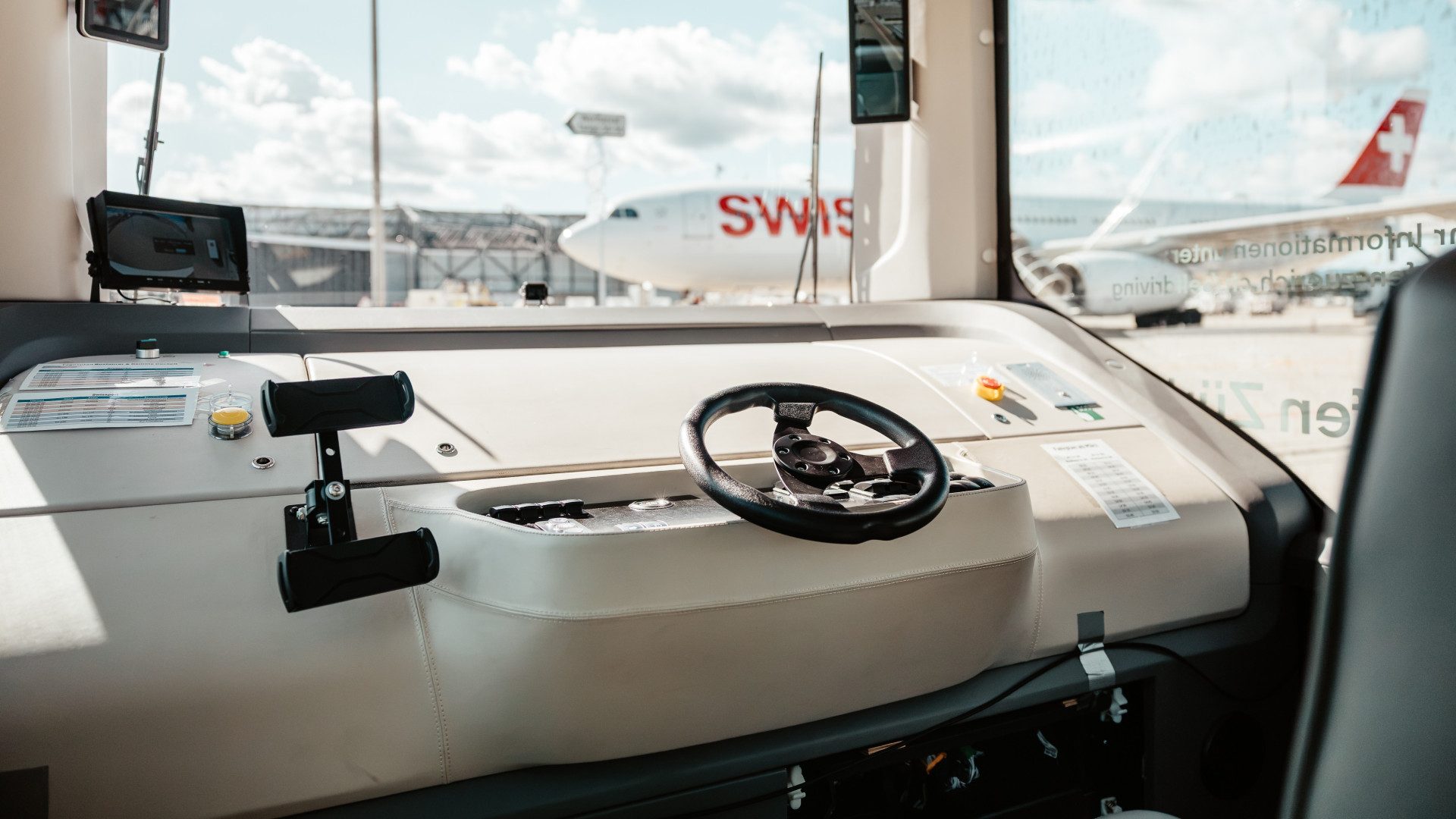
- The Oversight: While there is no human operator on board, the vehicles are not completely untethered. They are actively monitored via a state-of-the-art remote cockpit. Human operators from partner companies can step in via teleoperation if the system encounters an unprecedented edge-case scenario.
- The Route: To ensure absolute safety during the initial rollout, the electric shuttles are operating along a strictly defined, closed-loop route across airport grounds. Crucially, this designated path is mapped to avoid active aircraft taxiways and runways, completely eliminating the risk of intersection with commercial airliner traffic.
- The Phased Rollout: In the initial phase beginning this September, the shuttles are carrying no passengers as they undergo real-world verification. Following an anticipated four-week evaluation window, the vehicles will begin transporting employees of airport partner companies, including Swissport and Krummen Kerzers.
Chronology: A Methodical Path to Driverless Reality
The arrival of driverless shuttles at Zurich Airport is the culmination of a rigorous, multi-year developmental roadmap designed to satisfy stringent European regulatory frameworks.
March 2025: The Groundwork is Laid
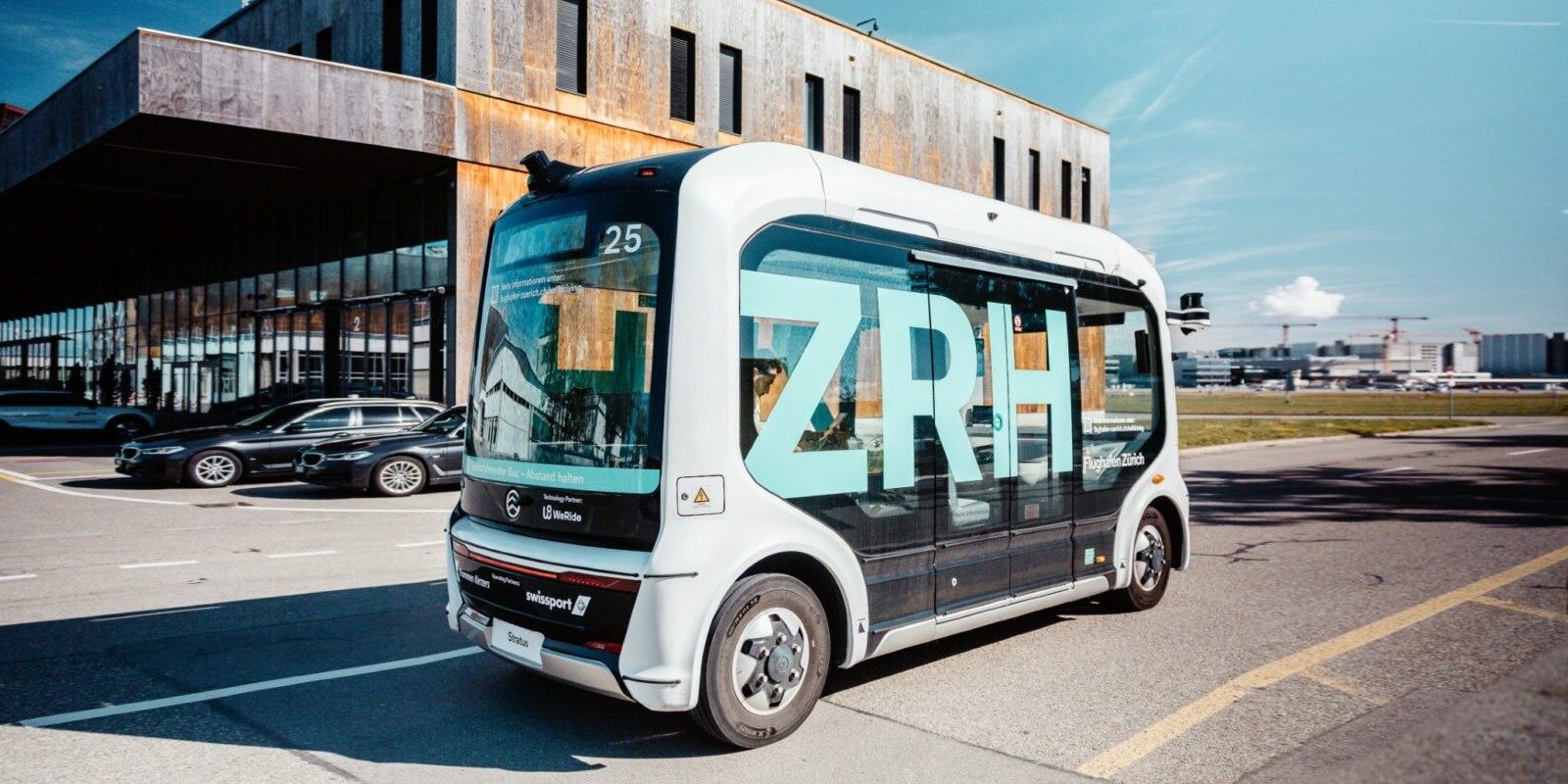
The collaborative project officially commenced in the spring of 2025. Zurich Airport teamed up with WeRide to introduce the hardware and begin the painstaking process of mapping the facility. Transitioning automated driving technology from a controlled test track to a bustling airport infrastructure requires mapping every centimeter of roadways, buildings, signage, and predictable pedestrian pathways.
Spring and Summer 2025: Phased Testing and Regulatory Compliance
Over the subsequent months, the electric shuttles were put through their paces in a phased testing approach. Achieving L4 status in Europe is no small feat; it demands strict adherence to rigorous technical conditions, data security standards, and comprehensive safety case filings. Engineers tuned the vehicles’ sensor suites—combining LiDAR, radar, high-definition cameras, and ultrasonic sensors—to handle unpredictable weather conditions, glare, and airport-specific obstacles such as ground service equipment (GSE) and logistics trucks.
September 2026: The Milestone Launch
Marking a significant milestone for European transport, the first fully automated trips without a safety driver on board took place in early September 2026. This transition moved Zurich Airport from a passive testing ground to an active pioneer, making it one of the very first aviation hubs on the continent to implement driverless L4 passenger shuttles in a live operational setting.
Supporting Data: Infrastructure, Decarbonization, and Safety
Zurich Airport’s deployment of WeRide shuttles does not happen in a vacuum. It is part of a much larger, comprehensive sustainability and modernization initiative aimed at slashing greenhouse gas emissions across ground operations.
Greening Airport Operations
Aviation hubs are essentially small, self-contained cities operating 24 hours a day, 7 days a week. Ground logistics—ranging from baggage tractors and employee transport to fueling and catering trucks—contribute significantly to an airport’s overall carbon footprint.
The integration of electric shuttles aligns seamlessly with Zurich Airport’s ongoing decarbonization targets. This project follows on the heels of other recent green infrastructure implementations at the airport, such as the deployment of high-efficiency electric aircraft tugs capable of cutting ground-handling emissions by up to 80%. By pairing electrification with automation, the airport is optimizing fleet efficiency, reducing energy consumption, and curbing local air and noise pollution.
The Anatomy of Level 4 Autonomy
Operating at Level 4 means the shuttle’s onboard computer—the "virtual driver"—makes all safety-critical decisions in real time. The vehicle’s redundant sensor array processes a 360-degree view of its surroundings up to hundreds of times per second.
Should the system detect an unexpected blockage, such as a stray piece of cargo or a maintenance vehicle parked illegally on the route, the shuttle can safely execute an emergency stop or maneuver around the obstacle within its pre-mapped parameters. If the maneuver requires stepping outside its operational design domain (ODD), the remote monitoring team is immediately alerted to take over via teleoperation, ensuring continuous traffic flow without compromising safety.

Official Responses: Putting Safety First
The transition to driverless public transport naturally invites public scrutiny regarding safety and reliability. Airport leadership has been proactive in emphasizing that safety protocols have guided every stage of the project.
"Safety was and remains our top priority at all times," stated Raphaël Glaesener, Senior Innovation Manager at Zurich Airport Ltd.
Glaesener addressed the cautious, methodical approach the airport is taking toward passenger integration. "That is why the first Level 4 trips will once again be carried out without passengers," he explained. However, looking ahead to the immediate future, Glaesener expressed confidence in the system’s trajectory: "We expect that after around four weeks of test operation, employees will be able to use the now fully automated shuttle."
Partner companies involved in the ground operations—such as ground handler Swissport and logistics firm Krummen Kerzers—have echoed this sentiment, actively participating in the project by providing dedicated personnel to manage the remote operations monitors. This collaborative corporate backing ensures that operational insights are shared directly between the tech developers, the airport authority, and the end-users.

Implications: What Zurich’s Pilot Means for the Future of Transport
The success of Zurich Airport’s Level 4 pilot project carries profound implications for the future of both autonomous mobility and global aviation infrastructure.
A Blueprint for Other European Airports
European regulatory bodies have traditionally maintained some of the strictest standards in the world regarding autonomous vehicles, particularly following the European Union’s comprehensive frameworks on artificial intelligence and automated driving systems. By successfully navigating these stringent legal and technical hurdles, Zurich Airport has effectively established a replicable blueprint for other major international hubs.
Airports across Europe—many of which grapple with massive employee parking lots, sprawling terminal complexes, and complex campus transit needs—are closely watching the Zurich trial. If these electric shuttles can reliably transport personnel across complex airport environments without human drivers, similar rollouts could soon appear at Frankfurt, Charles de Gaulle, Schiphol, and beyond.
Advancing the Commercial Case for WeRide
For Chinese autonomous vehicle giant WeRide, the high-profile European partnership serves as a vital validation of its global expansion strategy. As Western markets grapple with regulatory fragmentation—exemplified by ongoing investigations and varying certification standards for autonomous systems in the United States and Europe—WeRide’s ability to successfully deploy L4 technology in a heavily regulated Swiss environment demonstrates the maturity, adaptability, and global exportability of its software stack and hardware ecosystem.

The Human Element: Redefining Airport Jobs
While headlines frequently focus on the elimination of the traditional driver’s seat, the Zurich project highlights a transition rather than an outright disappearance of human labor. Drivers are replaced by remote operators and supervisors, shifting the workforce from manual vehicle operation to centralized fleet management and tech oversight. Furthermore, as the shuttles transition from empty test runs to carrying Swissport and Krummen Kerzers employees, they solve a practical logistical hurdle: providing reliable, zero-emission internal transit for the thousands of workers who keep the airport running daily.
Looking Ahead
As the four-week empty test phase progresses toward employee onboarding, the eyes of the autonomous vehicle industry remain fixed on Zurich. If the trial continues without incident, it will not only solidify Zurich Airport’s status as a technological frontrunner but also signal that the era of driverless, electric mass transit has officially arrived on European tarmac.
